What to see at Haut-Koenigsbourg Castle: the room-by-room tour
The lower courtyard
You enter through the lower courtyard, where Bodo Ebhardt recreated the service life of a castle: an inn, a forge, a mill. This is where groups linger for photos, and where you grasp the scale of the site—the main building already towers several storeys above you.
The main gate and drawbridge
The drawbridge still works. You pass through the main gate to enter the castle proper, and from there, the narrow spiral staircases begin, which you climb in single file. The steps vary in height; hold onto the handrail. Mobility information is available on the accessibility page.
Lordly apartments and the Lorraine bedchamber
The living quarters are furnished with medieval pieces and items from the Wilhelm II era, creating interiors that feel more lived-in than in most fortresses. The Lorraine bedchamber, with its wood panelling, is the first room I show to friends who doubt the value of a reconstruction. It’s chilly in there even in August—keep a layer on.
The banqueting hall and the armoury
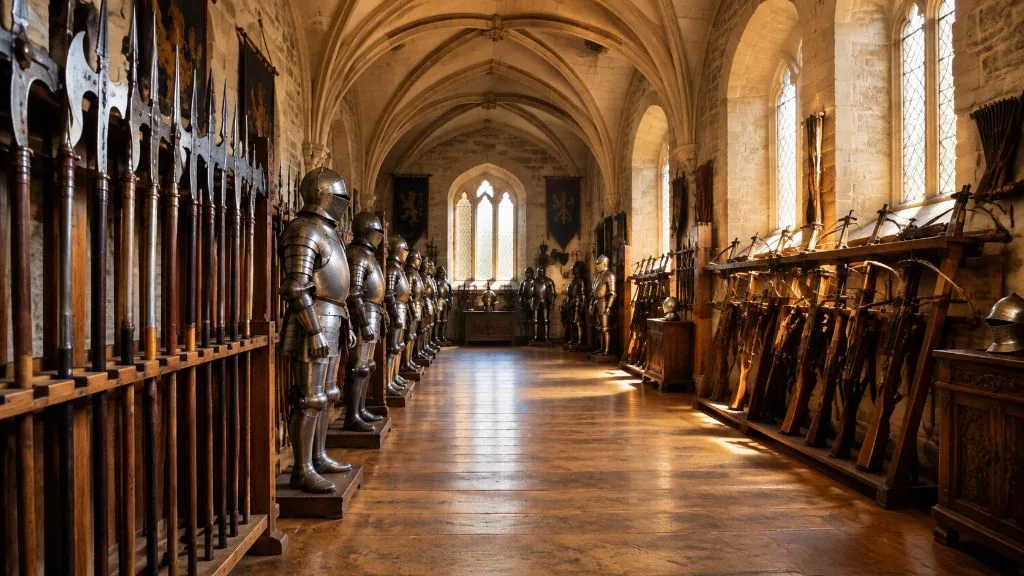
The banqueting hall is the grand reception room, its roof raised by Ebhardt compared to the original—a choice that drew criticism. The armoury displays a collection of weapons and suits of armour. Children tend to linger here longer than expected.
The Kaiser’s Hall
On the second floor, the prestige room commissioned by Wilhelm II: early 20th-century murals and a double-headed eagle on the ceiling. This is the most debated room in the castle because it makes no claim to being medieval—it’s a German emperor staging himself on the western border of his empire in 1908. The context is on the castle history page.
The keep and the great bastion
The keep, rebuilt about 14 metres taller than the original, and the great bastion, the western artillery platform. From here, you can see the Alsace plain, the Vosges, the Black Forest, and on very clear days, the Alps. When it’s overcast, you’ll mostly see Ortenberg Castle opposite. I prefer the bastion in the morning, before the sun is in your eyes.
The windmill, the medieval garden, and the well
The exit takes you past the windmill and the medieval garden, with its medicinal, dye, and edible plants. The well, 62.5 metres deep, is the one that supplied the castle; two later attempts to dig a second well were abandoned. If you visit with a guide on a day trip, these are the details you’ll remember by evening.
The rooms are visited in one direction: if you want to photograph the Lorraine bedchamber or the Kaiser’s Hall without ten people in the shot, arrive right at opening time, before the coaches do.
Visiting the castle with a guide
The most popular day trip from Strasbourg includes a 1.5-hour guided tour of the castle, after stops in Colmar and Riquewihr.
Day trips that include a guided tour of the castle
 Most booked
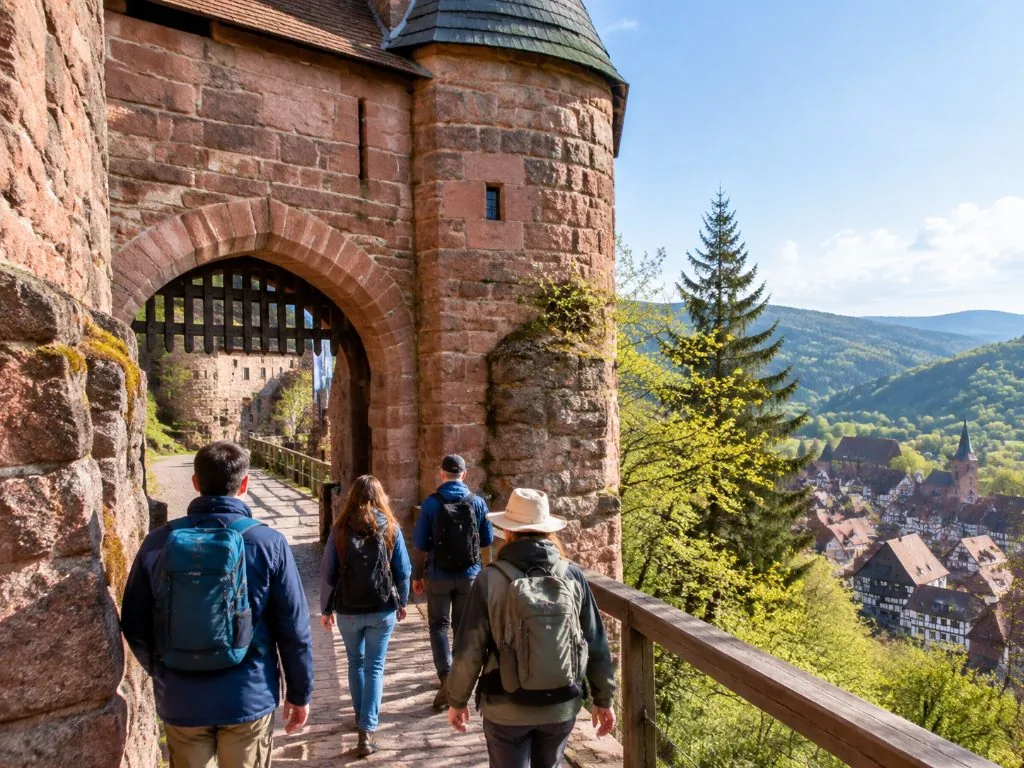
From Strasbourg: Alsace’s must-sees in a day
 Small group
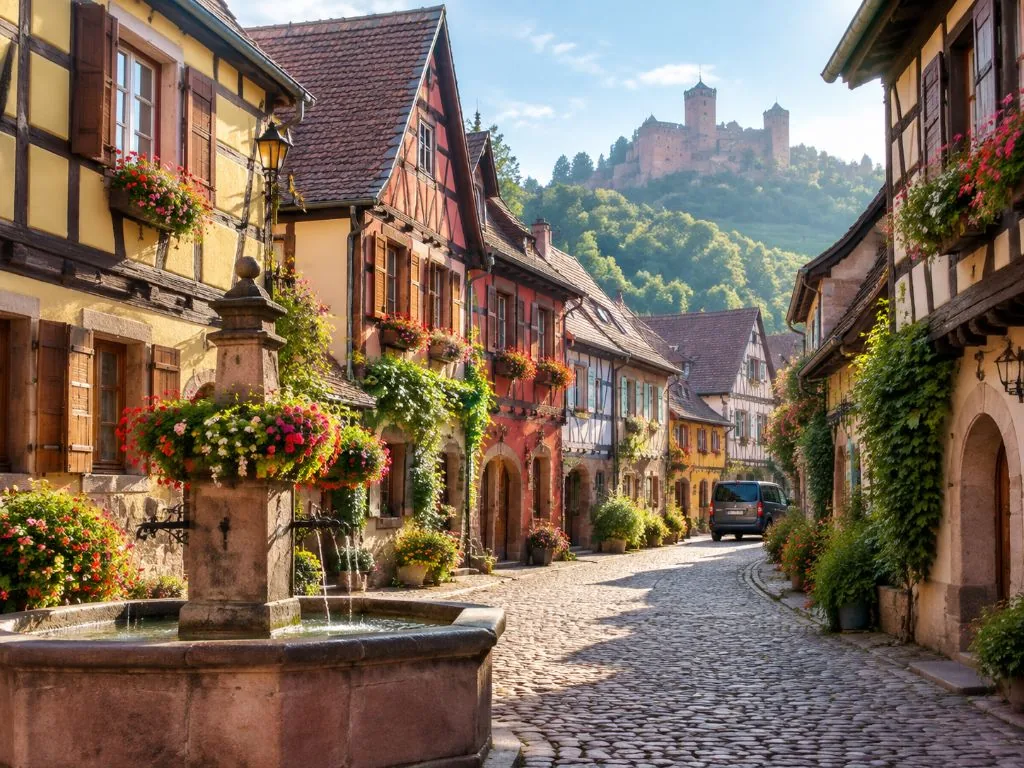
From Colmar: Haut-Kœnigsbourg Castle and villages, full-day small-group tour
 Entry included
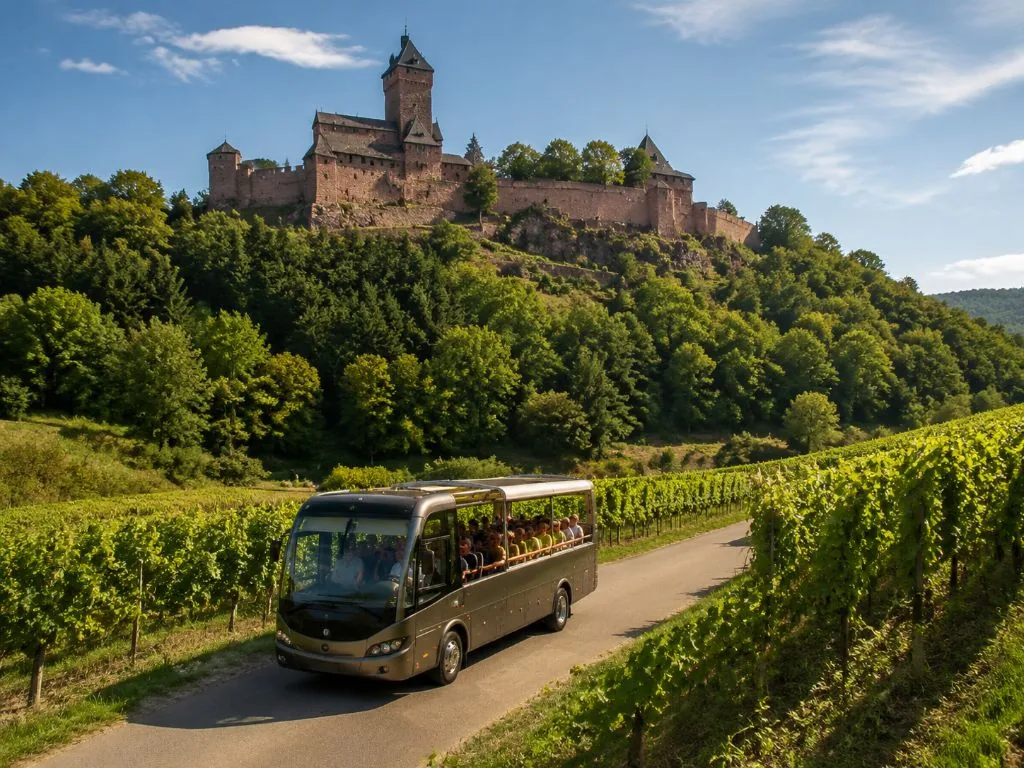
From Colmar: Alsace castle, villages and wine tasting
Frequently asked questions
How long does the castle visit take?
Around one hour inside, either guided or self-guided, and two hours on-site including parking and the walk up. Full details are on how much time to allow.
What is the Kaiser’s Hall?
The prestige room on the second floor, created for Wilhelm II, with early 20th-century murals and the double-headed eagle. Its significance is explained in the castle’s history.
What can you see from the great bastion?
The Alsace plain, the Vosges, and the Black Forest; the Alps on very clear days, which happens most often in winter. For conditions and seasons, see when to visit.
Are there a lot of steps?
Around 300, of uneven heights, in spiral staircases. Wheelchair users can only access the ground floor—see accessibility for details.